
Engaging Oord through Conceptual History, Islamic Theology, and Process Thought
By Adis Duderija

Framing Oord: Love, Conceptual Contestation, and the Architecture of Theology
What follows is not a conventional book review in the narrow sense of summarising and evaluating Thomas Jay Oord’s A Systematic Theology of Love, Volume 1: God and Creation. Rather, it offers a set of constructive and exploratory reflections that place Oord’s project into sustained conversation with a range of thinkers and traditions that illuminate its broader significance. In this respect, Oord’s work functions less as an isolated doctrinal proposal and more as a generative site of theological reconfiguration. It enables a rethinking of the relationship between love, power, and divine agency across multiple intellectual horizons, including Reinhart Koselleck’s conceptual history, Miroslav Volf’s account of flourishing in pluralistic modernity, Islamic traditions of love and mercy—especially in their Sufi articulations—and the process-relational metaphysical framework associated with Charles Hartshorne, Bernard Loomer, and Daniel Dombrowski. Read in this way, Oord’s book becomes not simply a systematic theology but an invitation to rethink the conceptual grammar of theology itself.
At the centre of Oord’s project lies a bold methodological and doctrinal claim: systematic theology must be reoriented around love as its primary, architectonic principle. This proposal is motivated by a dissatisfaction with what Oord sees as a long-standing and deeply entrenched prioritisation of divine omnipotence in both classical and modern theological traditions. For Oord, this prioritisation has generated a host of enduring theological incoherences, especially in relation to evil, divine hiddenness, providence, and the nature of creaturely freedom. The central move of the book is therefore a redefinition of divine power in terms of what he calls amipotence, a form of power that is neither coercive nor unilateral but intrinsically expressive of love. As Oord puts it, “Amipotence is the power of God’s uncontrolling love… God can’t control others.” This formulation captures the radical nature of his proposal: divine power is not the ability to determine outcomes unilaterally but the unsurpassable capacity to influence relationally.
This reconceptualisation of power is inseparable from Oord’s attempt to define love in a precise and systematic manner. He offers a widely cited definition: “to love is to act intentionally, in relational response to God and others, to promote overall well-being.” This definition is meant to function as the regulative core of the entire theological system, shaping Oord’s account of God, creation, and the God–world relationship. It is important to note that Oord does not merely identify love as one divine attribute among others but elevates it to the status of the primary interpretive key through which all other divine attributes must be understood. In this sense, the claim “God is love” is not a metaphorical or secondary assertion but the foundational proposition of the entire system. Yet Oord is careful to avoid collapsing love into God, insisting instead that “God is love, but love isn’t God.” This distinction allows him to preserve both the centrality of love and the personal, relational character of the divine.
At this point, however, a significant conceptual issue arises—one that Oord himself recognises but perhaps does not fully theorise: the instability and contestability of the concept of love. While his definition is admirably clear, it operates within a conceptual terrain that is deeply historically and culturally mediated. This is where Reinhart Koselleck’s conceptual history (Begriffsgeschichte) provides an especially illuminating framework. Koselleck demonstrates that key social and moral concepts—such as “love,” “justice,” or “freedom”—are not static entities but historically dynamic formations embedded within evolving social and political contexts. Concepts, in his formulation, exist in a “relation of tension” with the realities they seek to describe. They are inherently contested, subject to reinterpretation, and capable of carrying multiple, sometimes conflicting meanings.
Applied to Oord’s project, this insight suggests that the concept of love cannot be stabilised once and for all by a single definition, however carefully constructed. Rather, it remains open to ongoing reinterpretation as it is deployed across different theological, cultural, and ethical contexts. This is not a weakness but an inevitable feature of what might be called “thick” moral concepts—terms that carry both descriptive and evaluative weight and whose meanings are shaped by broader worldviews. Oord’s own work implicitly acknowledges this when he notes the multivocality of scriptural language and the diversity of everyday uses of “love.” The implication is that his definition should be read not as a final conceptual closure but as a normative proposal, a way of organising theological discourse that remains open to revision.
This insight becomes particularly significant when we consider Oord’s linking of love to “overall well-being” or flourishing. While this move provides a practical and ethical orientation for the concept of love, it simultaneously introduces another layer of contestation. What counts as “well-being” is itself deeply disputed, as Miroslav Volf has argued in his work on flourishing in a globalised world. Volf distinguishes between “thin” and “thick” accounts of the good life, noting that contemporary pluralistic societies tend to rely on thin, procedural definitions of flourishing—focused on rights, autonomy, and minimal harm—while religious traditions offer thicker, more substantive visions oriented toward meaning, virtue, and transcendence. The result is not consensus but ongoing disagreement about what it means to live well.
From this perspective, Oord’s definition of love as promoting “overall well-being” must be situated within a field of competing and often incompatible interpretations of flourishing. Different communities will inevitably disagree about what constitutes well-being, and these disagreements are not merely empirical but grounded in divergent metaphysical, ethical, and theological commitments. This dynamic is evident in contemporary cultural and political conflicts, where disputes about issues such as gender, justice, or religious freedom often turn on fundamentally different understandings of harm and benefit. The persistence of such disagreements suggests that the concept of flourishing functions as what Koselleck would call a historically saturated and contested term, one that cannot serve as a neutral or universally agreed-upon criterion.
The Islamic concept of maṣlaḥa (public benefit) offers a particularly instructive comparative example in this regard. Like Oord’s notion of well-being, maṣlaḥa is intended to function as a principle for promoting the common good and preventing harm. Yet its application has historically been shaped by specific theological and jurisprudential frameworks, often resulting in divergent and sometimes conflicting outcomes. For instance, practices or rulings justified as maṣlaḥa within one interpretive tradition may be criticised as unjust or harmful by others, particularly within contemporary reformist or progressive Islamic thought. This example highlights the extent to which concepts of well-being are embedded in broader interpretive frameworks and cannot be separated from them.
What follows from this is not a rejection of Oord’s definition but a more nuanced understanding of its status. His account of love functions most persuasively when read abductively—that is, as an attempt to offer the best available explanation for a range of moral intuitions, theological commitments, and experiential realities. It is a proposal that seeks coherence rather than finality, one that invites ongoing refinement and dialogue rather than closure. In this respect, Oord’s project aligns with his own epistemological commitments, which emphasise the provisional and fallible nature of theological reasoning.
A further dimension of this discussion emerges when we consider the place of love withi Islamic intellectual traditions. While Oord’s project takes the form of a systematic theology—a genre with its own distinct history within Christian thought—the centrality of love is by no means unique to Christianity. However, the way in which love has been articulated in Islamic contexts often differs significantly in form and expression. Rather than being developed primarily through formal theological systematisation, love in Islam finds its richest and most sustained expression within Sufi traditions, particularly in what is sometimes referred to as the madhhab al-ʿishq (school of passionate love).
In this tradition, love is not merely an ethical disposition or divine attribute but an ontological principle that underlies the entire structure of reality. The movement from early discussions of maḥabba (affectionate love) to later elaborations of ʿishq reflects an intensification of this idea, in which love becomes the very ground of both the lover and the beloved. Importantly, however, this conception of love is often expressed through poetic, symbolic, and experiential language rather than through systematic definition. Sufi writers frequently emphasise the inadequacy of literal language to capture the reality of love, insisting instead on metaphor, paradox, and performative expression. This stands in a certain tension with Oord’s project, which seeks conceptual clarity and systematic coherence. Yet the two approaches are not opposed so much as complementary.
The Sufi insistence on the ineffability of love serves as a reminder of the limits of conceptualisation, while Oord’s systematic articulation provides a framework for integrating love into broader theological discourse. Both approaches, in different ways, resist the reduction of love to a purely abstract or detached concept.
Moreover, there are significant resonances between Oord’s notion of amipotence and Sufi accounts of divine action. In many Sufi texts, God is portrayed not as a controlling sovereign but as the Beloved whose influence is primarily attractive and transformative. Divine action is understood less in terms of coercion and more in terms of invitation, drawing creatures into a relational dynamic of love. This perspective aligns closely with Oord’s claim that divine power is fundamentally non-coercive, that “love that controls isn’t love at all.” When combined with the Qurʾānic emphasis on mercy (raḥma), particularly in the divine names al-Raḥmān and al-Raḥīm, this suggests the possibility of a broader interreligious convergence around a relational and compassionate understanding of divine power.
In light of these comparative and conceptual considerations, Oord’s project can be seen as an important and ambitious attempt to reconstruct the foundations of systematic theology. Its significance lies not only in its specific doctrinal claims but in its methodological reorientation, which places love at the centre of theological reasoning. At the same time, the engagement with conceptual history and comparative theology highlights the need to approach this project with a certain epistemic humility, recognising the limits of definitional closure and the inevitability of interpretive plurality. It is precisely within this tension—between systematic coherence and conceptual openness—that Oord’s theology finds both its strength and its generative potential.
From Amipotence to All-Encompassing Mercy : Reframing Divine Power in Islamic and Process-Relational Perspective
If Section One has argued that Oord’s systematic theology is best understood as a regulative, abductive proposal centred on love—and one that must be situated within conceptually contested terrains—Section Two turns to what is, in my view, the most promising trajectory for extending and deepening his project in a comparative theological direction: namely, the integration of amipotence into an Islamic theological grammar through the conceptual primacy of divine mercy (raḥma). This move requires both a critical diagnosis of certain structural features of classical Islamic theology and a constructive retrieval of resources within the Qurʾānic and mystical traditions that resonate strongly with Oord’s rethinking of divine power.
At the heart of Oord’s proposal lies the claim that divine power is not best understood in terms of omnipotence—conceived as the ability to unilaterally determine any possible state of affairs—but rather as the unsurpassable relational efficacy of love. As he formulates it, “Amipotence is the power of God’s uncontrolling love,” and therefore entails that “God can’t control others, including creatures and creation that cause evil.” This claim is not merely a revision of one attribute among others; it is a reconfiguration of the conceptual grammar within which divine attributes are understood. Power is not diminished but redescribed, no longer as domination but as persuasive, relational, and co-creative influence. The implications of this shift are far-reaching, particularly with respect to the problem of evil, divine hiddenness, and the moral intelligibility of God.
When brought into conversation with Islamic theology, however, this proposal encounters both resonance and resistance. On the one hand, the centrality of divine mercy in the Qurʾān offers a rich set of conceptual resources for articulating a non-coercive, relational understanding of divine agency. The repeated invocation of God as al-Raḥmān and al-Raḥīm, together with the well-known association of raḥma with the womb (raḥim), suggests a theological grammar in which nurturing, sustaining, and compassionate relationality are ontologically primary. On the other hand, much of what is conventionally understood as Islamic orthodoxy operates—at least in its dominant speculative theology ( kalām ) formulations—within a framework that bears significant affinities to the classical theism that Oord critiques. In such frameworks, divine will (irāda) and power (qudra) are often foregrounded in ways that risk subordinating relationality to sovereignty, thereby making the integration of amipotence appear, at first glance, conceptually strained.
In my own work, I have argued that this tension can be addressed only by undertaking a dual move: first, by identifying the epistemological and hermeneutical presuppositions that sustain sovereignty-centred readings of divine power; and second, by retrieving internal Islamic resources—particularly those associated with Qurʾānic mercy and Sufi metaphysics—that allow for a re-centering of divine relational love. This approach does not amount to an external imposition of process-relational categories onto Islam, but rather to what might be called an immanent critique and reconstruction. It seeks to show that the resources for rethinking divine power in terms of uncontrolling love are already present within the tradition, even if they have not always been systematically foregrounded.
A key obstacle to this integration lies in the strong orthodox commitment to viewing the Qurʾān as unmediated, verbatim divine discourse. When combined with readings of certain divine epithets in maximalist terms—such as al-Qādir (the All-Powerful) or al-Malik (the Sovereign)—this epistemological stance tends to reinforce a conception of divine agency as unilateral determination. Within such a framework, divine power is understood primarily as the capacity to override creaturely agency and to bring about outcomes irrespective of creaturely cooperation. The resulting picture of God, while affirming transcendence, risks rendering problematic the very notion of divine love, particularly when confronted with the reality of suffering and evil.
Oord’s critique of omnipotence provides a helpful diagnostic here, not because it directly addresses Islamic theology, but because it exposes a more general conceptual conflation: the tendency to equate maximal power with unilateral control. By contrast, Oord insists that power, if it is to be understood in a way consistent with love, must be relational. It must involve the capacity to influence without coercing, to invite without determining, to empower without overriding. As he puts it, “a loving Spirit exists who can’t control creatures or creation. God isn’t all-powerful.” This formulation opens up the possibility of reinterpreting sovereignty-language not as metaphysical description but as rhetorical expression—what Islamic theology might identify as jalāl-language, expressing divine majesty rather than literal control.
It is at this point that the concept of divine mercy becomes decisive. The Qurʾān’s repeated emphasis on God’s mercy is not incidental but constitutive. Mercy is not simply one attribute among others but, arguably, the most pervasive and foundational description of the divine. From a process-relational perspective, this allows for a reframing of divine agency in which mercy is not the outcome of divine will but its very ground. In other words, God does not choose to be merciful; rather, God is merciful by nature. This aligns closely with Oord’s insistence that love is not a contingent attribute but essential to the divine being—“the Spirit must love.”
When read in this light, the Qurʾānic emphasis on mercy can be seen as providing an Islamic analogue to amipotence. Mercy, understood ontologically rather than merely ethically, becomes the mode of divine power. It expresses itself not through control but through nurturing, sustaining, and guiding relationality. The womb imagery associated with raḥma reinforces this interpretation, suggesting a form of power that gives life, sustains growth, and responds to the needs of the other without coercion. In this sense, divine mercy can be seen as the outward expression of an underlying reality of divine love, much as Oord describes love as self-giving, others-empowering, and uncontrolling.
This convergence becomes even more pronounced when we turn to Islamic mystical traditions. In Sufi thought, love (ḥubb/ʿishq) and mercy are often taken to be two inseparable dimensions of the same divine reality. The well-known hadith qudsi in which God declares, “My mercy encompasses all things,” provides a theological foundation for understanding divine relationality as universal and unbounded. Sufi metaphysics frequently goes further, suggesting that creation itself is the unfolding or self-disclosure of divine love. Although articulated in symbolic and poetic forms rather than systematic propositions, this perspective resonates strongly with the process-relational view of reality as dynamic, relational, and participatory.
From this vantage point, integrating Oord’s amipotence into Islamic theology becomes less a matter of importing a foreign concept and more a matter of rearticulating an already present intuition. The challenge lies not in the absence of conceptual resources but in the dominance of interpretive frameworks that privilege sovereignty over relationality. By foregrounding raḥma as the primary key to divine agency, it becomes possible to reinterpret other attributes in ways that align more closely with a love-centred theology. Sovereignty, for instance, need not be understood as control but as the unsurpassable capacity to sustain and guide the relational order of creation. Power becomes the power to nurture and to respond, not to dominate.
The process-relational tradition, particularly as articulated by Hartshorne, provides further conceptual support for this reconfiguration. Hartshorne’s critique of classical theism targets precisely the assumption that divine perfection entails unilateral control, immutability, and impassibility. Against this, he proposes a dipolar conception of God in which divine essence—as unsurpassable love, wisdom, and responsiveness—is stable, while divine actuality is dynamically related to the evolving world. This distinction allows for a conception of God as both constant in character and responsive in experience, thereby preserving both transcendence and relationality.
In this framework, divine power is necessarily relational because reality itself is relational. To exist is to interact, to affect and be affected. This insight aligns closely with Oord’s claim that divine love must be understood as giving-and-receiving, rather than as unilateral imposition. It also resonates with Loomer’s distinction between unilateral and relational power. The latter, which he associates with the capacity for mutual influence, provides the necessary condition for genuine relationship and therefore for love. Without such relational power, love collapses either into domination or into abstraction.
Daniel Dombrowski’s work on process mysticism adds an important experiential dimension to this discussion. By arguing that process theism offers a more coherent framework for understanding mystical experience than classical theism, Dombrowski highlights the extent to which a relational ontology better fits the phenomenology of religious life. Experiences of divine presence, compassion, and interconnection are difficult to reconcile with a model of God as impassible and unaffected. By contrast, a God understood as responsive, empathetic, and relationally present provides a more plausible account of such experiences. In this respect, Oord’s theology not only addresses doctrinal problems but also aligns with lived religious experience across traditions.
What emerges from this comparative and constructive exercise is a more nuanced understanding of Oord’s central claim. Amipotence is not simply an alternative attribute but a proposal to reframe the very meaning of power in theological discourse. When brought into conversation with Islamic concepts of mercy and Sufi articulations of divine love, it reveals a broader convergence around the idea that the deepest form of power is not coercion but relational generosity. This does not resolve all conceptual tensions—particularly those associated with the interpretation of scriptural language or the persistence of contested notions of flourishing—but it does provide a compelling framework for rethinking divine agency in a way that is both ethically and theologically coherent.
In conclusion, the integration of amipotence into an Islamic theology of mercy underscores the broader significance of Oord’s project. It demonstrates that the move from omnipotence to uncontrolling love is not an isolated innovation within Christian theology but part of a wider reconfiguration of the concept of divine power across traditions. At the same time, the engagement with conceptual history reminds us that such reconfigurations remain provisional, situated, and open to further development. The strength of Oord’s proposal lies precisely in this openness: its capacity to generate new conversations, to invite comparative engagement, and to offer a vision of divine power that is both intellectually credible and morally compelling.
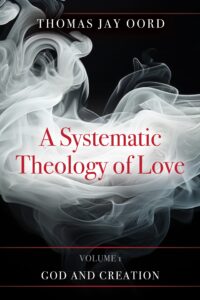
Finally, it should be noted that Oord’s study is remarkably erudite and impressively wide- ranging in its engagement with contemporary theology, philosophy, and the sciences. The breadth and depth of sources mobilized throughout the volume attest to a sustained and careful scholarly labor. There is little doubt that Oord has done his homework, and done it with both intellectual seriousness and constructive ambition. In light of this and his sustained body of work, Oord rightly stands as one of the leading contemporary theologians of love, and this volume decisively consolidates and advances that reputation.
References
Dombrowski, D. A. (2023). Process Mysticism. Albany, NY: SUNY Press.
Duderija, A. (2025, April 18). From Amipotence to All-Encompassing Mercy. Religions for Peace Australia.
Duderija, A. (2025). Beyond the Unmoved Mover: Why Process Theology Offers a Better God for Our Time. Open Horizons.
Hartshorne, C. (1984). Omnipotence and Other Theological Mistakes. Albany, NY: SUNY Press.
Koselleck, R. (1979/2004). “Begriffsgeschichte and Social History.” In Futures Past: On the Semantics of Historical Time (Trans. K. Tribe). New York, NY: Columbia University Press.
Loomer, B. M. (1976). Two conceptions of power. Process Studies, 6(1), 5–32. (Online reprint at Religion Online).
Lumbard, J. E. B. (2007). From Ḥubb to ʿIshq: The development of love in early Sufism. Journal of Islamic Studies, 18(3), 345–385.