
By Rick Harrell
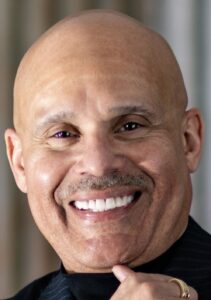
My task is to share my perspective, as a minister of color, on Open and Relational Theology. I am not a theologian or scholar; I am a hospital administrator and a pastor to hurting people from faith communities.
In 1935, Howard Thurman traveled to India, where he met Gandhi. In Jesus and the Disinherited, Thurman recalls a challenging conversation with a Hindu man who was president of Law College.
Thurman writes, We drank our coffee in silence. He said to me, “What are you doing over here? I know what the newspapers say about a pilgrimage of friendship, but that is not my question. What are you doing here?
More than three hundred years ago, your ancestors were taken from the western coast of Africa as slaves. The people who dealt in the slave trade were Christians.
One of your famous Christian hymn writers, Sir John Newton, who wrote the hymn Amazing Grace, made his money by selling slaves to the New World. The name of one of the famous British slave vessels was ‘Jesus.’ The men who bought the slaves were Christians. Christian ministers, quoting the Christian apostle Paul, gave the sanction of religion to the system of slavery.
Some seventy years or more ago, you were freed by a man who was not a professing Christian but rather the spearhead of certain political, social, and economic forces whose significance he himself did not understand. During the entire period since then, you have lived in a Christian nation in which you are segregated, lynched, and burned.
Even in the church, I understand, there is segregation. One of my students who traveled to your country sent me a clipping about a Christian church where the regular Sunday worship was disrupted so that many could join a mob against one of your people. When he had been caught and put to death, they returned to resume their worship of their Christian God.
“I am a Hindu. I do not understand. Here you are in my country, deeply rooted in the Christian faith and tradition. I do not wish to seem rude to you. But, sir, I think you are a traitor to all the darker peoples of the earth. I am wondering what you, an intelligent man, can say in defense of your position.”
“What does Christianity have to offer people who stand with their backs against the wall?”
Open and Relational Theology
I need you to let your imagination take you back to 1899, to the Jim Crow South, where Howard Thurman, a colored man, was born.He was raised by his mother and grandmother after his father’s death. His grandmother had spent the first 20 years of her life enslaved.
Because colored children were not allowed to attend public high school, he moved from Daytona Beach to Jacksonville to attend a Christian school, graduated from Morehouse in Atlanta, and earned an MDiv from Colgate Rochester Seminary, the alma mater of ML King Jr. He was ordained by a Baptist church.
He studied with Rufus Jones, a Quaker mystic who deeply influenced Thurman’s spirituality and commitment to nonviolent resistance. Thurman’s theology is a unique synthesis of Christian mysticism and social activism, treating spiritual transformation as the essential foundation for social justice. He became a nonviolent inspiration for Martin Luther King Jr.
Christianity offers Open and Relational Theology to those who are struggling and feel their backs against the wall.
Having your back against the wall is a difficult position in which one must act to avoid failure. Often, through no fault of your own, you feel desperate or trapped with few options or support.
People who have faced oppression by homophobia, racism, xenophobia, sexism, and misogyny under the Christian Empire’s economic, military, political, and ideological powers have lived within systems that profited from slavery and terror.
Their backs are against the wall.
Some have been hated for their cultural identity and sexual orientation, labeled as sinful or cursed, and taught to believe that God shares in this hatred.
For African Americans, Christianity and social justice are intertwined.
Many think we should leave the painful past alone. I did too, but it is part of my thinking and our culture.
I am a multiracial gay man, raised in the African American church culture of Detroit, educated in private schools, with wise older parents by adoption, and I still switch lanes in my Mercedes-Benz if I see a police car behind me.
Black evangelicalism is a unique religious and cultural tradition that merges conservative Protestant theology with a long-standing commitment to social justice and racial equality.
African American people have always selected parts of the Bible and set aside others.
Thurman writes that he read the Bible to his grandmother, who could not read or write, three times a week. She selected readings from the Psalms or the Gospels—never Paul, except 1 Corinthians 13, on love.
He writes, “During the days of slavery, the master’s minister would hold services and preach from Paul, ‘Slaves be obedient to your masters.”
For African Americans, Christianity and social justice are inseparable. Most African Americans do not consider themselves evangelical; they are saved, born again, or Christian.
It’s a relationship, not an association!
For Black people and other oppressed groups, the cognitive dissonance within Christianity comes from trying to reconcile the message of spiritual freedom with the history of faith being used as a tool for colonial oppression and slavery.
This duality causes believers to consistently confront complex theological and cultural conflicts.
I believe Open and Relational Theology will provide clarity. Open and Relational Theology answers the question, “What does Christianity have to offer to people who stand with their backs against the wall?”
Now, I teach that everything in life is either a principle or a condition, and conditions are subject to change. My interpretation of Open and Relational Theology is rooted in the principle—of love, the unchanging quality of the divine.
Thomas Oord answers alongside Howard Thurman.
Howard names the condition; Tom names the principle.
The Condition: Howard
- Historical Christian involvement in the slave trade meant Christians and religious leaders profited from a system that dehumanized African Americans, turning them into property bought, sold, and exploited as if they were tools or animals, with their lives valued only for the wealth they could produce.
The principle: Tom
God is relational and loving; God does not will or coerce evil.
Slavery was not the will of God. God did not have a plan for it.
The condition: Howard
2. Religious sanctioning of slavery used Scriptural justification to defend and legitimize the practice. Christianity offered theological support for an economic and political system based on human bondage.
The principle: Tom
Scripture cannot be used to justify coercive power; interpretation must prioritize love.
Love is a divine influence, unconditional and not controlling.
I believe Scripture is the testimony of a people, not an infallible weapon.
God is not control, and not everything that happens is good.
The condition: Howard
3. Failure of emancipation to secure dignity and equality, or freedom without justice, leaves people still socially and economically oppressed and structurally excluded.
The Principle: Tom
God’s love influences us toward flourishing and well-being; divine love calls for social transformation. Love does not harm. I believe, Love includes forgiveness and justice.
The condition: Howard
4. Ongoing violence and terror against Black people—lynching, burning, imprisonment, and structural racism—continued in a society that professed Christian values.
The Principle: Tom
God suffers with victims and invites human agency to resist evil non-coercively.
Love is the only power in the universe. Anything else is a choice.
The condition: Howard
5. Christian institutions and worshippers were complicit in violence, including slave ownership by Ivy League schools, by participating in or condoning it.
The principle: Tom
Open and Relational theology locates moral responsibility in human institutions rather than in God’s will.
The condition: Howard
6. Moral betrayal and loss of credibility: Is Christianity a betrayal of oppressed peoples?
The principle: Tom
The Primacy-of-love ethic demands integrity: words of faith must match actions.
Theology offers no defense for oppression; it issues a prophetic call to justice and love. There is an implicit demand that Christians confront history and change practice.
Open and Relational Theology answers the challenge outlined in Jesus and the Disinherited and offers hope for Christianity.
Let be so, And so it is. There is a power for good in the universe, and we can use it. It is the power of love.